
Guide
How Employers Verify a Telehealth GP Certificate, AHPRA Check and QR Code Guide
25 Sept 2026
A practical guide to when an asthma flare can be assessed safely by phone, what actually triggers attacks at home and at work, and when it's a medical emergency instead.
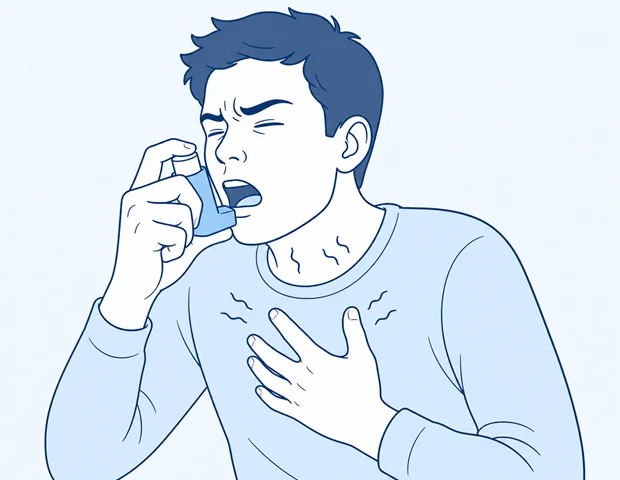
A phone consultation can gather symptom history, speech, reliever response, known triggers, previous attacks and the impact on work. It cannot replace emergency assessment when symptoms are severe, and it may not provide measurements such as oxygen saturation or lung function unless the patient already has reliable equipment and knows how to use it.
Speech, symptom pattern, reliever use, prior asthma history and work triggers can all inform the assessment.
Visible breathing effort, objective measurements and uncertainty about severity can change the appropriate care setting.
Severe breathlessness, inability to speak normally, blue/grey colour or poor reliever response should bypass routine certificate care.
Telehealth works for asthma because much of the assessment involves listening to your breathing and speech, rather than a physical exam. But that only holds within a certain range of severity. Once you can't complete a sentence, your lips or fingernails turn blue or grey, or your reliever stops helping at all, the risk profile changes completely, and these are the classic markers of a severe, potentially life-threatening attack, not just a worse-than-usual day.
● Blue or grey lips, tongue or fingernails
● Unable to speak more than a few words at a time
● No improvement, or symptoms worsening, after using your reliever inhaler
● Severe breathlessness even while sitting still
If any of these apply, call 000 immediately rather than waiting for a telehealth booking, and don't attempt to drive yourself to hospital if your breathing is severely affected.
A desk-based role with flexible screen breaks is a very different proposition to a warehouse job with dust exposure, a hot kitchen, or a driving job where a coughing fit at the wheel is a safety issue. The same flare severity can mean a day of working from home for one person and a genuine safety risk for another, which is why the appropriate period off tends to reflect the specific duties involved rather than the diagnosis alone.
● Recognising early warning signs, increased reliever use, a tight chest before exertion, waking at night with symptoms, before they build into a full flare
● Knowing whether your workplace involves dust, fumes, extreme temperatures, physical exertion or driving, and planning ahead for high-risk days
● Understanding that disrupted sleep from night-time coughing affects next-day alertness and safety, not just comfort
● Keeping a simple personal record of what triggered a flare, which makes future planning and workplace conversations easier
Australia has a uniquely severe environmental trigger worth knowing about: epidemic thunderstorm asthma. The 21 November 2016 Melbourne event, described in The Lancet Planetary Health as the largest and most catastrophic epidemic of its kind recorded worldwide, sent several thousand people to emergency departments and was linked to ten deaths. High ryegrass pollen combined with a specific storm type causes pollen grains to rupture into fragments small enough to penetrate deep into the airways. Research in The Lancet Respiratory Medicine found many people affected in 2016 had a history of hay fever with or without a prior asthma diagnosis, so spring, especially humid, high-pollen days with storms forecast, is a genuinely higher-risk period worth planning around, particularly for outdoor workers and anyone with hay fever.
If asthma affects your day-to-day ability to work, it can meet the threshold for a disability under the Disability Discrimination Act 1992, entitling you to request reasonable workplace adjustments, avoiding certain cleaning products or fragrances, ventilation changes, or advance notice of dust-generating work nearby. Employers can only decline where an adjustment would cause genuine, significant hardship, not mere inconvenience. You aren't obligated to disclose a health condition unless it affects your ability to do the job safely, but if asthma is a recurring issue at work, the Fair Work Ombudsman provides free guidance on raising this with an employer.
A single consult and certificate cover this specific flare, not ongoing management. If you're using your reliever more than usual, waking at night with symptoms, or this is becoming a pattern, book a follow-up with your regular GP rather than relying on repeat certificates. A written asthma action plan, developed with your regular GP, sets out what to do at different symptom levels and is a widely recommended tool for reducing flare frequency and severity over time.
This caution isn't just clinical convention. The Australian Institute of Health and Welfare has found that asthma is associated with around 23% of the total days lost from full-time work due to chronic disease nationally, behind only depression and arthritis. Separately, AIHW data shows around 2.8 million Australians, roughly 11% of the population, live with asthma based on the 2022 National Health Survey. At that scale, a same-day, phone-accessible assessment matters; waiting to see whether a flare settles on its own isn't always realistic when duties can't flex around it.
For a broader look at how asthma affects work capacity, see the asthma condition page. For background on symptoms, triggers and when to seek urgent care, Healthdirect's asthma overview and Asthma Australia are both useful, independent references.
OMC Health provides real-time consultations with AHPRA-registered GPs, 7 days a week. If the GP determines a certificate is clinically appropriate, it's emailed the same day, from 9.99.
Watch for blue or grey lips, being unable to speak in full sentences, no improvement after your reliever inhaler, or severe breathlessness even at rest. If any of these signal a medical emergency, call 000 rather than waiting.
It can be. If asthma substantially affects your day-to-day ability to work, it may meet the definition of disability under the Disability Discrimination Act 1992, entitling you to request reasonable workplace adjustments such as changes to cleaning products, ventilation, or advance notice of dust-generating work.
Dust mites in bedding and carpets, mould in damp or poorly ventilated areas, pet dander, wood smoke, strong fragrances and aerosol cleaning products are among the most common household triggers. Identifying your specific triggers with your GP makes targeted changes far more effective than general advice.
Yes. Epidemic thunderstorm asthma, most notably the 2016 Melbourne event, has affected people with a history of hay fever even without a prior asthma diagnosis. High grass pollen combined with a specific type of thunderstorm can trigger sudden, severe symptoms, making high-pollen storm days in spring a genuine risk period.
● Healthdirect: Asthma; symptoms, triggers and when to seek urgent care.
● Asthma Australia: free asthma action plans and management resources.
● JobAccess: Reasonable Adjustments; workplace adjustment guidance for chronic health conditions.
● Fair Work Ombudsman: Employees with Disability; workplace rights and protections.