

Guide
Medical Certificates for University Exams: What You Need, When You Need It
25 Sept 2026
Usually, until every blister has crusted over, about five days. Here's why it's tied to the rash, not the calendar, how to help at home, and how to get a carer's leave certificate.
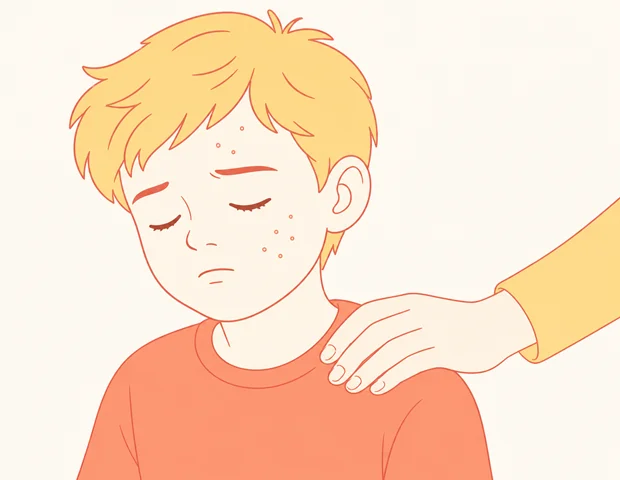
Chickenpox remains contagious until the blisters have fully crusted over, so the exclusion period is tied to the rash's stage rather than a fixed number of calendar days, which can vary slightly between children depending on how quickly the rash progresses.
The child's return to school is an infection-control question, while the parent's absence from work is a carer's leave question. A school or childcare service may apply its current exclusion policy, and the parent may separately need evidence that they were required to care for the child. Keeping those two decisions separate makes the guide much more useful than another list of itch-relief tips.
Child return
Use current public-health and education guidance about infectiousness and the condition of the rash.
Parent work absence
If the parent is well but caring for the child, the relevant workplace document is evidence of carer's leave.
High-risk contacts
Pregnant or immunocompromised contacts can require additional caution beyond the ordinary school-return question.
If you need to stay home to care for a child with chickenpox, your child's symptoms and current presentation determine the appropriate exclusion period for a carer's leave certificate, rather than you needing to guess at how long to stay away from work.
Seek in-person medical care if your child develops a high fever, signs of skin infection around the blisters, or seems unusually unwell, rather than relying on a telehealth assessment alone.
Australian public health guidance is consistent on this point: infectiousness tracks the rash itself, from around one to two days before it appears until every blister has dried and crusted, typically five to seven days later. This crusting-based rule, rather than a fixed calendar count, is why the GP will always check on how the rash is actually progressing before confirming an exclusion period, since faster or slower healing genuinely changes when it's safe to return.
For a broader look at chickenpox and work capacity, see the chickenpox and work capacity. Healthdirect's overview of chickenpox covers symptoms and how long it stays contagious.
OMC Health provides real-time consultations with AHPRA-registered GPs, 7 days a week. If the GP determines a certificate is clinically appropriate, it's emailed the same day, from 9.99.
Yes. Chickenpox is contagious for one to two days before the rash shows up, which is a common reason it spreads through households and classrooms before anyone realises.
Keeping fingernails short, dressing in loose clothing, lukewarm baths and staying cool can all help. Speak with a pharmacist or GP about appropriate symptom relief rather than guessing.
Yes. A carer's leave certificate can be issued where a parent or guardian needs to care for a child with chickenpox.