

Guide
How Employers Verify a Telehealth GP Certificate, AHPRA Check and QR Code Guide
25 Sept 2026
Your health information is sensitive. Here is exactly what OMC Health does and does not share, and the laws that protect you.
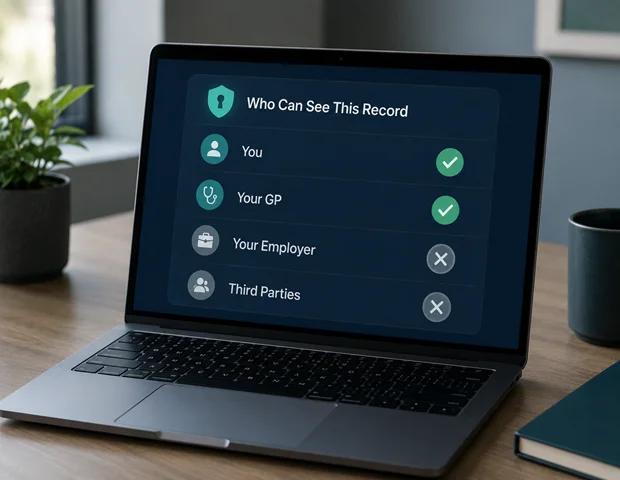
To provide the certificate service, OMC Health collects your name, date of birth, contact information, and health information relevant to your certificate request. This information is used solely to facilitate your GP consultation and issue your certificate. It is stored securely in encrypted clinical systems.
• Your diagnosis or the nature of your illness
• Clinical notes from your consultation
• Medications discussed or prescribed
• The reason for your absence (beyond generic 'unfit for work')
• Consultation content or GP assessment details
• Any information to your employer, family or third parties without your explicit consent
An OMC Health certificate confirms your name, the consultation date, the period of absence covered, and the issuing GP's details. It does not state your diagnosis or any clinical details. Your employer sees only what is on the certificate, nothing more.
No. OMC Health will not disclose any patient health information to an employer, educational institution, insurer or any third party without the patient's explicit written consent. Employers can verify a certificate's authenticity through the QR code portal; this does not reveal any health information.
OMC Health operates under the Privacy Act 1988 (Cth). Health information is 'sensitive information' under the Act and has the highest level of privacy protection. The Australian Privacy Principles (APPs) govern how OMC Health collects, uses, stores and discloses your information. OMC Health's full privacy policy is available at onlinemedicalcertificate.au/privacy-policy.
Patient health records are stored in encrypted, secure clinical systems compliant with Australian health record standards. OMC Health does not use patient health data for advertising, marketing profiling, or any purpose beyond providing the certificate service. Consultation records are maintained in accordance with Medical Board of Australia record-keeping standards.
You have the right to access your personal information held by OMC Health, request correction of inaccurate information, make a complaint if you believe your privacy has been breached, and receive a copy of OMC Health's privacy policy. To exercise any of these rights, contact OMC Health through the contact page at onlinemedicalcertificate.au/contact/.
If you need a medical certificate, OMC Health connects you with an AHPRA-registered GP for a real-time phone consultation. If the GP determines a certificate is clinically appropriate, it is issued and emailed the same day. From 9.99. Full refund if not approved.
Your certificate confirms your name, the consultation date, the period covered, and the GP's details. It does not state your diagnosis, the nature of your illness, or any clinical details from the consultation.
No. OMC Health does not sell, share, or use patient health information for advertising or any commercial purpose other than providing the certificate service. Health information is sensitive information under the Privacy Act 1988 and is subject to the highest level of protection.
Patient records are stored in encrypted, secure clinical systems in compliance with Australian health record standards. Records are maintained in accordance with the Medical Board of Australia requirements.
Yes. Under the Privacy Act 1988, you have the right to access your personal information held by OMC Health and request corrections. Contact OMC Health via onlinemedicalcertificate.au/contact/ to exercise these rights.